AN INTERACTIVE EXPLORATION 01 — THE SHROUD
Look closer.
Discover the Shroud.
Explore the image, follow the marks, and discover the stories and questions behind the linen.
WHAT IS THE SHROUD OF YESHUA?
A cloth, a mystery,
a story to explore.
The Shroud of Turin is a linen cloth bearing the front and back image of a man. For many Christians, it is a powerful witness to the Passion of Yeshua and an invitation to explore the meeting of faith, history and scientific inquiry.
Read the full introduction ↗THE INTERACTIVE ATLAS
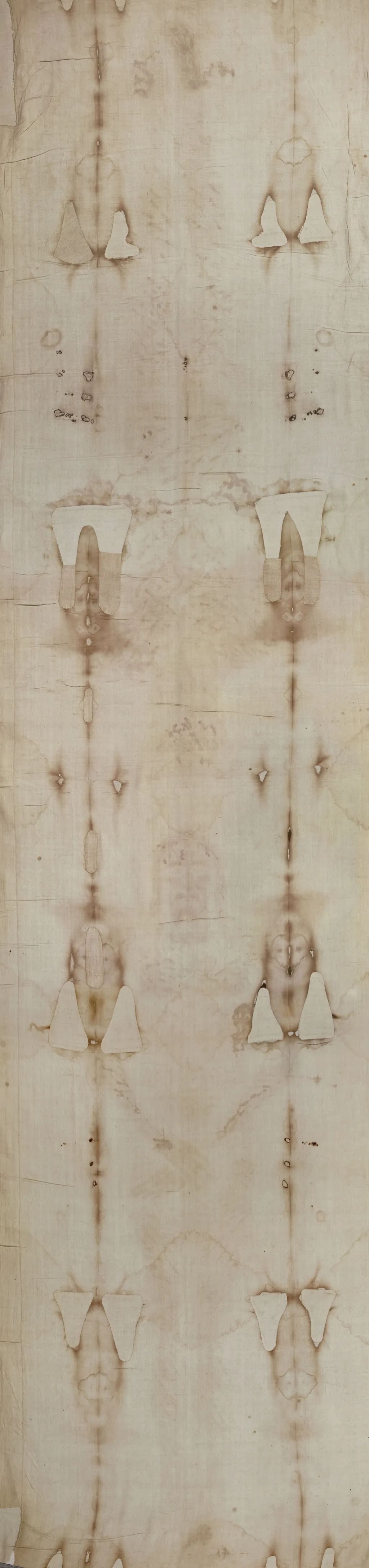
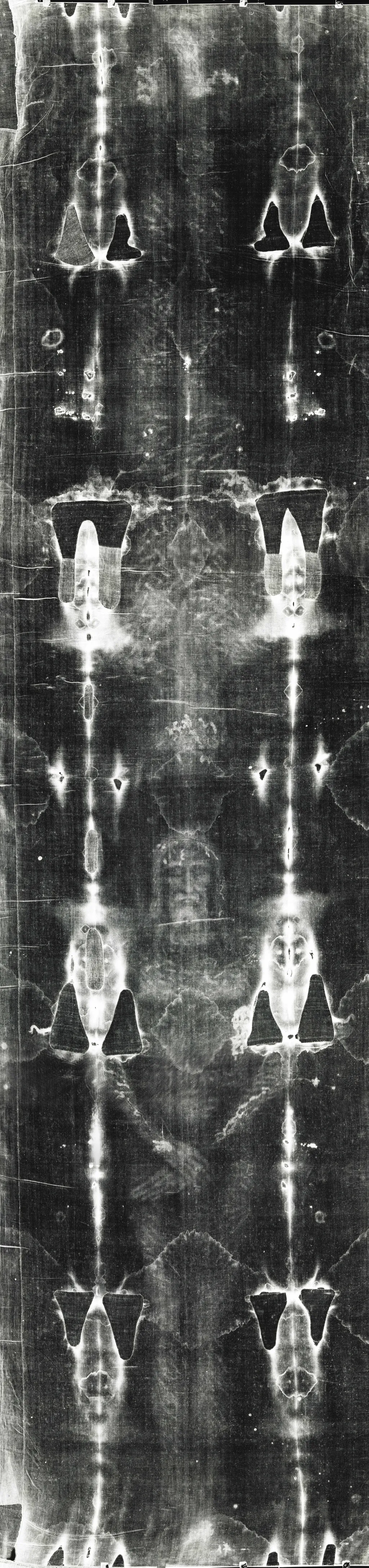
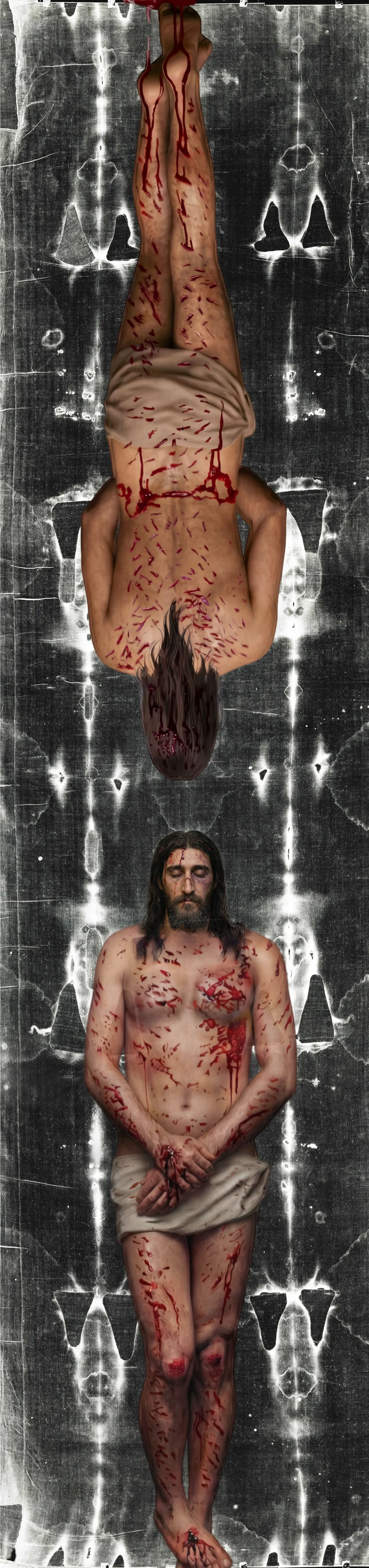
Every mark has a story.
Select a numbered circle beside the cloth to open its full detail. Zoom in up to 1,200% to examine the cloth more closely.
 © Vernon Miller
Select a circle beside the cloth · Zoom in up to 1,200% to examine the cloth more closely. · Scroll to move around the image
A CLOSER READING
Image, history
and interpretation.
The Shroud invites exploration across several perspectives: the visible image, the history of the cloth, scientific investigation, and the Gospel accounts of the Passion.
Descriptions here distinguish what is visible from interpretations of the marks. The identity, age and formation of the image remain subjects of debate.
THE SHROUD ATLAS · 21 ARTICLES
Explore the story
one chapter at a time.
Choose an article from the table of contents to jump straight to it below.
CHAPTER 1 OF 21
What is the Shroud
of Turin?
The cloth, its image, the questions it raises, and how they are examined in this series. The chapter covers the linen and its documented history, the negative image and its three-dimensional encoding, the stains and the wounds they record, the 1978 STURP investigation, and the 1988 radiocarbon result.
CHAPTER 2 OF 21
The linen of the
Shroud of Turin
The fibres, the herringbone weave, the sidestrip and its seam, and what textile study can tell us about the cloth. This chapter examines the Masada comparison, yarn twist, the absence of wool, and the limits of using these features to establish a date or origin.
CHAPTER 3 OF 21
The blood of the
Shroud of Turin
The stains, the tests used to identify them, and the competing interpretations of their origin. This chapter explores clotting, serum halos, blood transfer, and what the evidence can and cannot tell us about the wounds.
CHAPTER 4 OF 21
Silent witnesses:
pollen and limestone
Two microscopic traces, one organic and one mineral, and what they can and cannot show about where the cloth has been. This chapter examines the pollen identifications, the limestone comparisons, and the questions of contamination, sampling, and geographic provenance.
CHAPTER 5 OF 21
The night the Shroud spoke: Secondo Pia’s photograph
How a photograph taken in Turin Cathedral in 1898 revealed that the image on the cloth is a negative, and how the discovery was received
Read Chapter 5: The night the Shroud spoke: Secondo Pia’s photograph →
CHAPTER 6 OF 21
When distance became data: the three-dimensional encoding
How a 1976 image analysis found that the brightness of the Shroud’s image tracks the distance between the cloth and the body, and what that finding does and does not show
Read Chapter 6: When distance became data: the three-dimensional encoding →
CHAPTER 7 OF 21
The digital autopsy: reconstructing the body from the image
What computer analysis of the Shroud’s image can show about the body beneath it, what it cannot show, and how to tell the difference
Read Chapter 7: The digital autopsy: reconstructing the body from the image →
CHAPTER 8 OF 21
The scourging: the wounds of the back and legs
What the Gospels say about the flogging, how Roman scourging worked, what the cloth records, and where the evidence is firm and where it is not
Read Chapter 8: The scourging: the wounds of the back and legs →
CHAPTER 9 OF 21
The crown of thorns: the wounds of the scalp
What the Gospels say about the mockery, how the head wounds appear on the cloth, why their shape matters, and which questions remain open
Read Chapter 9: The crown of thorns: the wounds of the scalp →
CHAPTER 10 OF 21
From Gethsemane to Golgotha: the sequence of the Passion
The Gospel account of the night and the morning before the crucifixion, what the cloth records along the way, and where the sequence is firm and where it is estimated
Read Chapter 10: From Gethsemane to Golgotha: the sequence of the Passion →
CHAPTER 11 OF 21
The quarry outside the walls: Golgotha and its landscape
What the Gospels say about the place of execution, what excavation and survey show about the ground, how the tomb tradition is tested, and where the identification is secure and where it is not
Read Chapter 11: The quarry outside the walls: Golgotha and its landscape →
CHAPTER 12 OF 21
The crucifixion: the wounds of the hands, feet, and back
The Gospel account of the crucifixion, the Roman practice behind it, what the cloth records of the wrists, feet, and back, and how far each reading goes
Read Chapter 12: The crucifixion: the wounds of the hands, feet, and back →
CHAPTER 13 OF 21
The lower-abdominal protrusion
What may explain the slight lower-abdominal contour described on the Shroud, and how posture, breathing mechanics, body position, and image formation shape its interpretation
CHAPTER 14 OF 21
The Death of Jesus
What the Gospels say about the removal and burial, the Jewish law and time pressure behind it, what the Shroud and the Sudarium of Oviedo record, and how far the comparison can be pressed
CHAPTER 15 OF 21
The empty wrappings: the linens in the tomb
What the Gospels say about the linen cloths found in the tomb, what the Greek words mean, what the Shroud can and cannot contribute, and where the forensic question ends and the question of faith begins
Read Chapter 15: The empty wrappings: the linens in the tomb →
CHAPTER 16 OF 21
The hidden thread: a timeline from 33 AD to 2026
Explore clickable milestones from the Gospel burial accounts to modern research. Each point opens context and a longer reading; early custody links are clearly marked as debated.
Read Chapter 16: The hidden thread: a timeline from 33 AD to 2026 →
CHAPTER 17 OF 21
Faces through the centuries: the Pantocrator, the coins, and the Pray Codex
Three kinds of evidence before 1355 that have been compared with the Shroud: an icon, a series of gold coins, and a medieval manuscript. What each shows, what the comparisons prove, and why each is open to other explanations
Read Chapter 17: Faces through the centuries: the Pantocrator, the coins, and the Pray Codex →
CHAPTER 18 OF 21
The interface: the 1978 STURP investigation
The team, the instruments, the 120 hours in Turin, what the investigation established, what it could not explain, and how its one internal dispute was handled
Read Chapter 18: The interface: the 1978 STURP investigation →
CHAPTER 19 OF 21
The radiocarbon date: what the 1988 test found and what has been argued since
The three laboratory results, the sample and where it was taken, the challenges to homogeneity and contamination, the reweaving and chemistry arguments, and what the date does and does not settle
Read Chapter 19: The radiocarbon date: what the 1988 test found and what has been argued since →
CHAPTER 20 OF 21
The physics of an impossible image: the hypotheses for how the image formed
The properties any explanation must account for, the candidate mechanisms and their tests, the laboratory results so far, and what is established and what is not
Read Chapter 20: The physics of an impossible image: the hypotheses for how the image formed →
CHAPTER 21 OF 21
The forgery question: what a medieval maker would have needed
The forgery hypotheses, the knowledge and technology arguments and their limits, the radiocarbon date as the central test, the Nicolotti thesis, and what the evidence does and does not decide
Read Chapter 21: The forgery question: what a medieval maker would have needed →